
Editors-In-Chief
Gwendolyn Paradice
Born and raised in Dallas, Texas, Gwendolyn also had some formative years in Austin, TX; Detroit, MI; and Columbia, MO. Along the way, they discovered a passion for all things pizza, became a dog park aficionado, started papercrafting, developed a lexicon of strange facial expressions, and learned that anime is for all ages. Their TBR list is both heartening and worrisome; so many great books in the world makes life feel kinder than it really is, but the longer that list gets, the more Gwendolyn thinks about how little time they have to read them all. Still, they persevere. The books will be read, somehow, even if that means having a wake where people read excerpts from the books Gwendolyn never got to taste while they were alive.
Gwendolyn is the author of the Hudson Prize winning short story collection More Enduring for Having Been Broken (Black Lawrence Press), the co-authored chapbook Carnival Bound (or, please unwrap me) (The Cupboard Pamphlet), and the forthcoming novel The Divining Season (Aunt Lute Books). A recipient of a 2024 National Endowment for the Arts Fellowship, they currently teach and reside in Kentucky.
Gwendolyn’s favorite short fiction includes: “Welcome to Your Authentic Indian Experience,” by Rebecca Roanhorse; “Frost Mountain Picnic Massacre,” by Seth Fried; “Jerry’s Crab Shack: One Star,” by Gwen Kirby; “These are the Fables,” by Amelia Gray; “Don’t Eat Cat,” by Jess Walter; “Ghosts, Cowboys,” by Claire Vaye Watkins; “God in the Chicken Coop,” by Hananah Zaheer; “Implosion,” by Melissa McCracken; “The Bridge,” by Pamela Painter; “There’s a Place for You,” by Mark Z. Danielewski; “Help Me Follow My Sister into the Land of the Dead,” by Carmen Maria Machado; “My Chivalric Fiasco,” by George Saunders; “Out of the Mouths of Babes,” by Monica McFawn; “Snake,” by Rebecca Evanhoe; “The Black Square,” by Chris Adrian; “The Flowering Ape,” by Anya Deniro; “The Lineaments of Gratified Desire,” by Ysabeau Wilce; “The Relive Box,” by T.C. Boyle; “This Todd,” by Nafissa Thompson-Spires; “First Person Shooter,” by Charles Yu; “Sorry Doesn’t Sweeten Her Tea,” by Helen Oyeyemi; “Kids Who Come Back,” by Mariana Enríquez; and “What We Lost,” by Brenda Peynado.
Gwendolyn’s favorite short CNF includes: “Auscultation,” by Steven Church; “We’re More Ghost than People,” Hanif Abdurraqib; “Note,” by Elissa Washuta; “Stuck,” by Joey Franklin; “World’s Finest Chocolate,” by Kiese Laymon; “The Council of Pecans,” Robin Wall Kimmerer; “Moving Water, Tucson,” by Peggy Shumaker; “Ten Years I’ll Never Get Back,” by Liz Stephens; “Seeing,” by Annie Dillard; “Freaky Beasts: Revelations of a Onetime Bodybuilder,” by William Giraldi; “Woven,” by Lidia Yuknavitch; “Soviet Trees,” by Yelizaveta Renfro; “Cherish This Ecstasy,” by David James Duncan; “The Pain Scale,” by Eula Biss; “Too Many Spirits Who Begged to be Let In,” by Jenny Boully; “The Solace of Open Spaces,” by Gretel Ehrlich; “How to Tame a Wild Tongue,” by Gloria Anzaldúa; “Now What? The Enduring Hold of Choose Your Own Adventure Books,” by Leslie Jamison; “The Pony Problem,” by Sloane Crosley; “The Professor of Longing,” Jill Talbot; “Outline Towards a Theory of a Mine Versus the Mind and the Harvard Outline,” by Ander Monson; and “Trench Town Rock,” by Kamau Brathwaite.
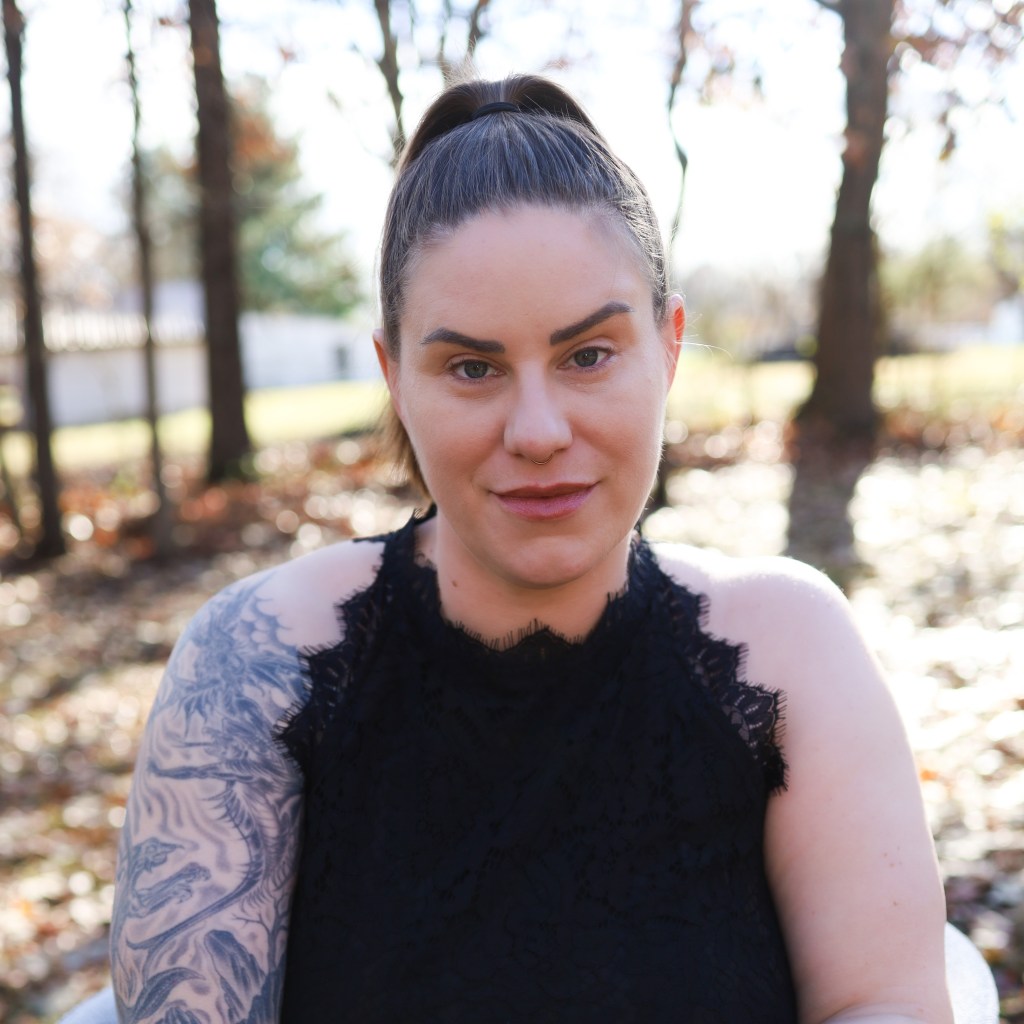
Carley Gomez
Carley Gomez started off as a comfort reader, then became an academic reader, and finally transitioned into a porch reader—her interests change as abruptly as weather in the climate crisis. The through-line is persuasion. Con her into believing the world isn’t ending, or that maybe it is, that tape works inside the human body, that capitalism is a God-send, that at the end of it all, death can be peaceful and kind. It doesn’t matter what the con is, only that she buys in.
Stories have held Carley in thrall for a long time now. She studied English for eleven years and taught writing for eight. Now she helps students craft essays, teaches Creative Writing at a local prison, and tells her friends what to read so that she can pick their brains about a story’s ending. Writing isn’t the only art form that holds her interest—she works her way through a variety of dance styles (this year the focus is Salsa) and visual art practices (watercolor is keeping her on her toes this month). She’s also a big fan of napping.
Carley Gomez is a Cuban American writer based in Madison, WI. Her fiction can be found online and in print, including in Mid-American Review, The Baffler, and The Mud Season Review. She and her husband co-run Partial Press, an award-winning experimental press. Carley has a PhD in English with a concentration in Creative Writing from the University of Missouri and an MFA in writing from the School of the Art Institute of Chicago.
Fiction Editor
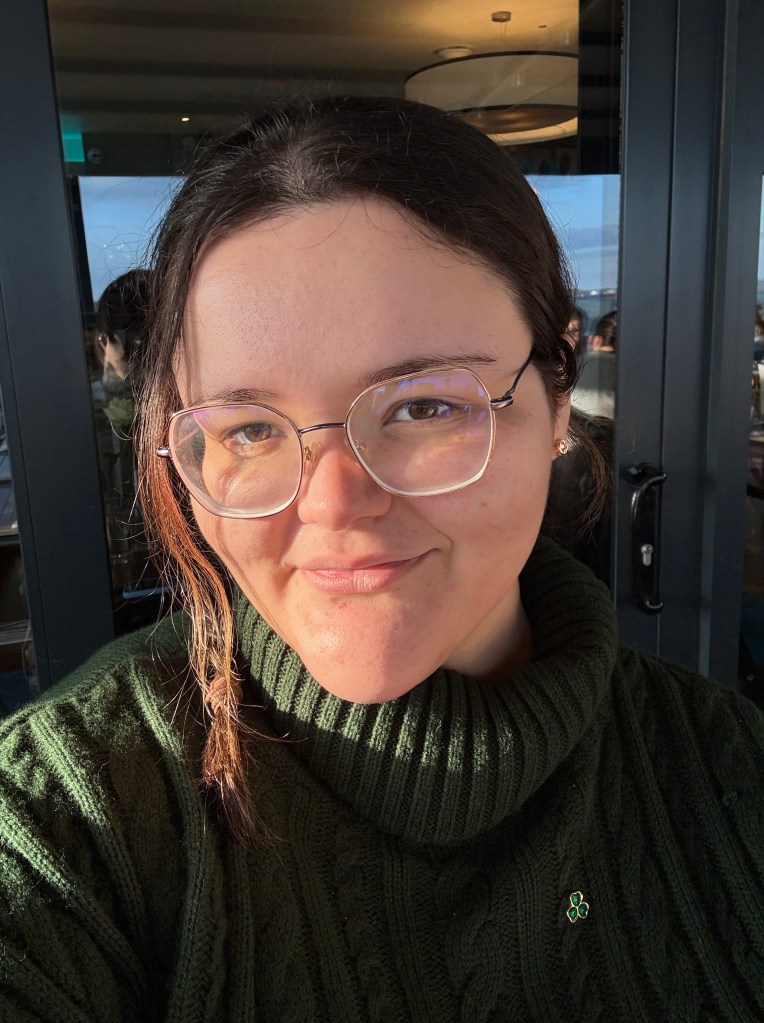
Aryn Dotson
Aryn Dotson is an MFA student in fiction at Southern Illinois University. Born and raised in Eastern Kentucky, her work navigates the complexities and nuances of Appalachian identity, history, and culture, with particular emphasis on queer and feminist interpretations. She holds a BA from Murray State University and has previously worked in publishing at the University Press of Kentucky. Her work can be found in Notations Magazine. She enjoys buying books for her ever-growing TBR, spending time with family, collecting candles, and pestering her two cats (Bean and Oatmilk).
Nonfiction Editor
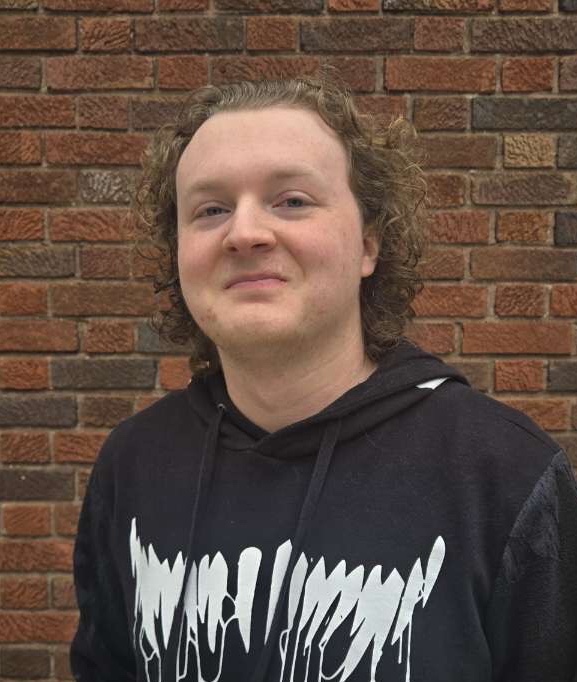
Jonathan Knowles
Jonathan Knowles is a graduate of Murray State University’s Creative Writing program. He’s learned to appreciate poetry despite his penchant for prose, though he has yet to learn how to write it. Jonathan’s love for writing stems from formative fantasy and mystery novels, but his love for storytelling is rooted in the movies he obsessively and repeatedly watched as a child, as well as a renewed interest in comic books and graphic novels. In terms of prose, he gravitates toward detailed, introspective fiction and nonfiction, such as the works of James Baldwin and Lindsey Drager.
Short fiction and nonfiction that stand out to Jonathan: “A Forager’s Guide to Love” by Heather Hawk; “The Circular Ruins” by Jorge Luis Borges; “Dradin in Love” by Jeff Vandermeer; “Sonny’s Blues” by James Baldwin; “The Kite Maker” by Brenda Peynado; and “Pushing the Knives” by Dustin M. Hoffman.
Hybrid Editor
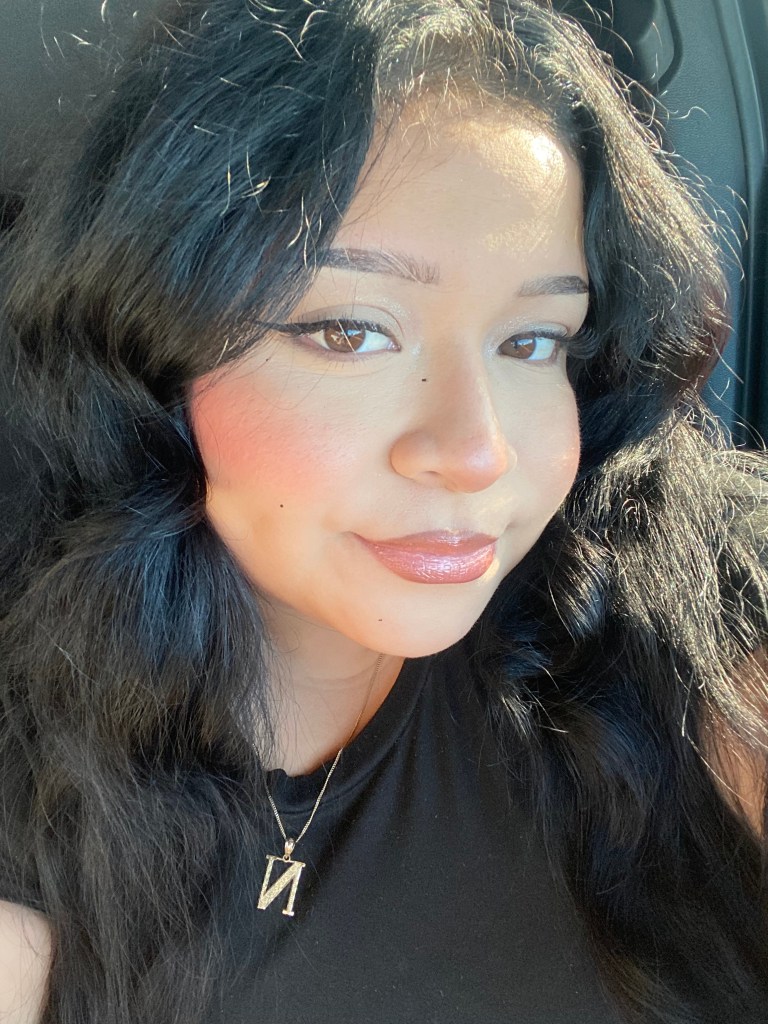
Neah Mendoza
Born and raised in Orange Walk Town, Neah Z. Mendoza is a proud Belizean writer and queer girl. Her writing can be described as “horror-adjacent” and has roots in Belizean folklore, weird girl lit, bubblegum horror, and general speculative fiction. Charm her with disgusting food descriptions, insatiable and unlikable characters, your takes on your local folklore, and stories with sharp teeth.
Some of Neah’s favorite short fiction: “Medusa,” by Caroline Beuley; “The Fairy Swap,” by Emily Harper Ellis; “Baba Small Pox,” by Eleanor Stern; “Song for Maude,” by Elliott Gish, “The Water Girl,” by Amanda Bintz, “The Fig Tree,” by Puloma Ghosh, “The Husband Stitch,” by Carmen Maria Machado and “Fruiting Bodies,” by Kathryn Harlan.
Neah’s own fiction can be found in Glassworks Magazine and Waxing & Waning. She has three short stories forthcoming with God’s Cruel Joke, and many more scratching at her brain like rats behind walls. You can follow her instagram (@neahziana) for updates on her writing and most recent publications.
Publisher
Diane Goettel
Diane has a BA from Sarah Lawrence College and an MA in English from Brooklyn College. She co-edited the anthologies Feast: Poetry & Recipes for a Full Seating at Dinner and Art & Understanding: Literature from the First Twenty Years of A&U. She lives in Mount Vernon, New York with her husband and daughter.
 faircopyjournal.com